Why Men's Nails Split, and What to Do About It
Men's nails split for the same reason anyone's do: trauma and dehydration. The daily wear of manual work knocks the free edge about, and hands that are repeatedly wet and dry strip out the natural oils that hold the nail's thin layers together. Dermatologists call the layered version onychoschizia, and it is not caused by a lack of vitamins in most people, however often that gets said. It fixes itself the way all nail problems do, slowly, because a nail plate is dead tissue with no way to repair itself once it has grown past the root. What you do differently over the next few months decides what grows through. Here is what is actually happening, why it shows up more in the kind of work and habits that are more common among men, what the evidence on biotin really says, and what is worth doing about it.
summary
In brief
- Splitting is almost always onychoschizia: the nail's thin layers separating at the free edge, mainly from trauma and dehydration, the everyday knocks and wear the nail takes and the moisture repeatedly stripped out of it, rather than from a vitamin shortfall.
- Fingernails grow roughly 3mm a month and take three to six months to grow out fully, so nothing visible changes overnight.
- The evidence for biotin fixing ordinary splitting is thin. The studies behind the claim are small, had no placebo group, and did not even establish whether the people in them were deficient to start with.
- Filing rather than cutting, gloves for wet or chemical work, and moisturising the nail plate and the skin around it do more for most people than any single product.
- A hardener can help, used as directed, and not every hardener is applied the same way: our Scientifique K+ is a penetrating liquid brushed from the centre of the nail to the tips two to three times a week, while Mava-Strong is a strengthening base coat for the whole nail.
- See a GP or dermatologist if it's one nail behaving differently to the rest, the nail is lifting from the skin underneath, there's a dark streak, or there's soreness, swelling, redness or warmth, or pus or discharge developing.
What is actually happening when a nail splits?
A nail is not a single solid piece. The nail plate is built from layers of flattened, dead cells packed with keratin, produced continuously at the matrix, the living root tucked under the cuticle, and pushed forward as new cells form behind them. Once a section of nail has grown past the matrix, it gets no further oil, moisture or repair. Whatever condition it left the root in is the condition it keeps until it is trimmed or grown off.
There are two different things people mean by "splitting", and the fix is different for each:
- Onychoschizia is the layers of the nail plate coming apart at the free edge, usually showing as fine horizontal peeling or flaking at the tip. Dermatology sources link it mainly to repeated water and detergent exposure.
- Onychorrhexis is longitudinal splitting or ridging, a crack or ridge running lengthwise down the nail rather than peeling at the tip.
Most of what people call "my nails keep splitting" is onychoschizia. It is common, it is mechanical rather than medical in almost all cases, and because the nail cannot repair itself, growing it out with better habits is the only real fix.
For the full picture on why nails split and peel in general, across genders and causes, see our guide to Splitting & Peeling Nails. This piece looks specifically at why the pattern shows up more in the day-to-day of manual work and in habits that are more common among men.
Why does this show up more in men's day-to-day?
Nail structure itself is not different by gender. What differs is exposure, and several everyday patterns cluster around the kind of work and habits that are still more common among men in the UK:
- Manual work and mechanical load. Trades such as construction, agriculture, vehicle maintenance and manual trades remain heavily male-dominated in the UK workforce. Gripping tools, handling materials and repeated knocks all put direct mechanical stress on the free edge, which is exactly where onychoschizia starts.
- Water, detergent and dehydration. Anyone whose hands are repeatedly wet and dry all day, washing up, cleaning down surfaces, washing hands frequently in a trade or in healthcare, is stripping out the oil that holds the nail's layers together, over and over. Occupational dermatology research links repeated wet work to hand and nail changes, including nail deformity.
- Cold, dry air. Outdoor and site work through a UK winter dries the nail plate and the skin around it in the same way it dries facial skin, and there is generally less inclination to reach for a moisturiser afterwards.
- Using nails as tools. Prising open packaging, scraping off labels, popping open tins: every one of these flexes and lifts the free edge instead of using an actual tool for the job.
- Cutting rather than filing, and not finishing the edge. Clippers themselves are not the problem, the NHS and the American Academy of Dermatology are both fine with them, but a clipped edge is a blunt edge, and a blunt, unfiled edge catches on things far more easily than one that has been smoothed. Filing habits (or the lack of them) are far less established in most men's routines than they are in a manicure habit.
- Age. Nails do naturally become more prone to breaking as people get older, which the NHS notes as a normal change rather than a problem in itself, and it applies regardless of gender.
None of this makes men's nails biologically different. It makes the exposure profile different, and the exposure is what actually causes the splitting.
Is it a vitamin deficiency? What the evidence on biotin actually shows
This is one of the most repeated claims in nail care, and it is worth being honest about what the evidence supports rather than what supplement marketing implies.
Biotin (vitamin B7) has been studied for brittle nails since the late 1980s. A 2018 review of the evidence found that in small studies, people given 2.5mg of biotin a day for several months did see improvements in nail firmness, hardness and thickness: in one dataset 41 of 45 patients improved over roughly 5.5 months, in another 22 of 35 improved over several months. That sounds like a case for supplementing. It is not, quite, for two reasons the review itself raises. None of the studies had a placebo group to compare against, so some of the apparent improvement could simply be the natural effect of gentler nail care during the study period. And critically, none of them established whether the participants were actually biotin-deficient to begin with. The studies show that biotin supplementation was followed by improvement in a small, uncontrolled group. They do not show that ordinary splitting in someone eating a normal, varied diet is caused by low biotin, or that taking a supplement will fix it.
For that reason this is not a supplement recommendation, and it is not one we make. If splitting nails come with other signs, ongoing tiredness, hair thinning, or feeling the cold more than usual, that combination is worth raising with a GP as a possible sign of iron deficiency or a thyroid issue, checked properly with a blood test rather than guessed at with a bottle from the chemist.
How long does it actually take to fix a split nail?
Fingernails grow at roughly 3mm a month. Measured directly in a study of healthy young adults, the average fingernail growth rate was 3.47mm a month, several times faster than toenails. A full fingernail, from the base at the cuticle to the free edge, takes roughly three to six months to grow out completely.
That means two things in practice. First, nothing about a split nail changes quickly, however good the routine, because the nail itself cannot repair the damage that is already there; it can only grow a better section behind it. Second, the split section will eventually be trimmed or filed away entirely as new nail grows through, so consistency over months matters far more than any single application of anything.
What actually helps
None of this is complicated, and none of it needs to be expensive. In order of how much difference it makes:
- Keep nails shorter. A shorter free edge has less leverage against it, so it catches and splits less. This matters more for anyone doing manual work than almost anything else on this list.
- File, don't cut, or finish a cut with a file. Clippers compress and cut the nail; the edge they leave is blunt rather than smooth, and a blunt edge snags. If you clip to take length off, follow it with a fine emery board to smooth the edge, working in one direction rather than sawing back and forth, which is the standard filing advice from dermatologists.
- Gloves for wet and chemical work. Rubber or nitrile gloves whenever your hands are going to be in water, detergent, solvent or cleaning product for more than a few minutes break the cycle of dehydration that causes most onychoschizia in the first place. This is standard NHS and dermatology advice, not a beauty add-on.
- Moisturise the nail and the skin around it, not just your hands. The nail plate has a fixed oil supply set at the matrix and never gets more once it has grown out, so putting oil or a moisturising serum onto the nail plate itself, and a cream onto the surrounding skin and cuticle, is doing a genuinely different job to hand cream alone. A few minutes a day, ideally in the evening, is enough.
- Use a hardener the way it is designed to be used. Not every hardener is applied the same way, so follow the directions for the one you own. Our Scientifique K+ is a penetrating liquid rather than a lacquer: apply it from the centre of the nail to the tips only, keeping it off the cuticles, then keep your hands facing down for a minute while it works in. Two to three times a week is enough until nails reach the strength you want, then reduce for maintenance, ideally in the evening so it is not washed straight off. Our Mava-Strong works differently: it is a strengthening base coat applied over the whole nail at least twice a week, worn alone or under polish. The Scientifique K+ formula uses dimethylurea together with crystal resin from the pistachio mastic tree to improve the cohesion of the nail's keratin fibres, and does this without formaldehyde, the ingredient older-style hardeners relied on and which is now on the prohibited list for EU cosmetics.
When to see a GP or dermatologist
Most splitting is mechanical and environmental, and it improves with the steps above over the following months. A handful of things are worth a proper look rather than a change of routine:
- One nail changing when the others haven't. A single nail behaving differently to the rest of the set, rather than general wear across all ten, is worth having checked.
- The nail lifting or separating from the skin underneath it (onycholysis), which shows as a pale, opaque area where the nail has come away from the nail bed.
- A dark streak running down the nail, particularly a new one, or one on a single nail rather than several. Dermatology sources flag pigmented streaks as something that should be assessed rather than watched, precisely because the rare but serious causes need ruling out.
- Soreness, redness, swelling or warmth around the nail, or pus or discharge developing, which the NHS and the British Association of Dermatologists list as signs of a possible infection rather than ordinary wear.
- Suspected fungal infection. Colour change (yellow, white or brown), thickening, a nail that grows more slowly, or crumbly, flaking debris under the nail are the pattern the British Association of Dermatologists describes for fungal nail infection, which needs confirming with a test before treatment rather than guessing.
None of this is usually something to worry about. It is simply the point where a GP, pharmacist or dermatologist can rule out the less common causes properly, rather than a supplement or a hardener guessing at a cause that mechanical wear and tear does not actually explain.
Key takeaways
- Splitting nails are almost always onychoschizia, layers coming apart at the free edge from trauma and dehydration, the mechanical wear the nail takes and the moisture repeatedly stripped out of it, not a vitamin problem.
- The work and habits more common among men, manual trades, tools, hands constantly wet and dry, cutting instead of filing, explain the pattern far better than anything biological.
- Biotin's evidence base is small, uncontrolled and does not establish that ordinary splitting is caused by deficiency; it is not something to reach for as a fix.
- Full nail growth takes three to six months, so results from a better routine show up in the new nail growing through, not overnight.
- Shorter nails, filing over cutting, gloves for wet work, daily moisturising of the nail and surrounding skin, and a hardener used as directed cover almost everything that is fixable.
- A single changed nail, separation from the nail bed, a dark streak, soreness, swelling, redness, warmth, discharge or suspected fungal infection are reasons to see a GP or dermatologist rather than change products.
Why do men's nails seem to split more than they used to notice?
Not because men's nails are biologically different. It is usage. Manual work, using nails as makeshift tools and cutting rather than filing all put trauma on the free edge, while hands that are repeatedly wet and dry at work or at the sink strip the moisture out of it. That combination of trauma and dehydration is where splitting starts.
Is nail splitting a sign of a vitamin deficiency?
Usually not. The popular idea that splitting means low biotin is not well supported by the evidence for someone eating a normal, varied diet; the studies behind the claim are small, uncontrolled and did not test participants' biotin levels beforehand. If splitting comes with tiredness, hair thinning or feeling the cold more than usual, that combination is worth a GP conversation and a blood test rather than a supplement.
How long does it take for a split nail to grow out?
Roughly three to six months for a fingernail to grow out completely from base to tip, at an average rate of around 3mm a month. Nothing changes quickly; a better routine shows up in the new nail growing through, not the section that is already split.
Should I cut or file nails that are splitting?
File where you can, or finish a clip with a fine file so the edge is smooth rather than blunt. File in one direction rather than sawing back and forth, which is the standard dermatology advice for reducing splitting at the tip.
Does a nail hardener actually work?
Used as directed, yes: a hardener fortifies the nail against the mechanical strain that causes splitting. They are not all applied the same way. Our Scientifique K+ is a penetrating liquid, brushed from the centre of the nail to the tips two to three times a week, avoiding the cuticles, while our Mava-Strong is a strengthening base coat used over the whole nail at least twice a week. Neither is a substitute for gloves, filing technique or moisturising.
When should I see a doctor about a nail?
If it's one nail changing when the others haven't, the nail is lifting away from the skin underneath it, there's a dark streak (especially a new one or on a single nail), there's soreness, redness, swelling or warmth, or pus or discharge developing, or the pattern looks like a fungal infection (thickening, crumbling, discolouration).
Shop Mavala
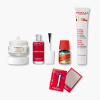
Our products in this guide, drawn from the full nail care range and cuticle care range: a moisturising serum for the nail plate, a daily cream for the cuticle and surrounding skin, a protective base for nails facing frequent water and detergent contact, a penetrating hardener for weak, splitting nails, and a nourishing cream for the root.
Reviewed by Lynn Mason, Mavala UK Nail Expert
This guide was reviewed by Lynn Mason, Mavala UK's in-house nail expert. Lynn has worked with the Mavala brand for over a decade, training nail technicians and beauty editors across the UK and writing Mavala's how-to guides.
Sources
- InformedHealth.org (IQWiG), NCBI Bookshelf, "In brief: Structure of the nails", last update 29 July 2024. Source for nail plate structure, growth at the matrix, and the roughly 3mm-a-month growth rate.
- DermNet NZ, "Nail terminology", accessed 6 August 2026. Definitions of onychoschizia and onychorrhexis.
- DermNet NZ, "Occupational skin disorders in homemakers", accessed 6 August 2026. On wet-work exposure and its effect on the nail unit, including nail deformity.
- American Academy of Dermatology, "11 dermatologists' tips for healthy nails", accessed 6 August 2026. Gloves, moisturising and keeping nails trimmed and filed. Filing-direction advice as referenced in our own published guide, How to File Your Nails Without Weakening Them.
- NHS, "Nail problems", page reviewed 12 March 2024. Self-care, ageing, and signs of possible infection worth seeing a GP about.
- Lipner SR, Scher RK. "Biotin for the treatment of nail disease: what is the evidence?" Journal of Dermatological Treatment, 2018 Jun;29(4):411–414.
- Yaemsiri S, Hou N, Slining MM, He K. "Growth rate of human fingernails and toenails in healthy American young adults." Journal of the European Academy of Dermatology and Venereology, 2010 Apr;24(4):420–3.
- DermNet NZ, "Onycholysis", updated December 2020.
- DermNet NZ, "Melanonychia", accessed 6 August 2026.
- British Association of Dermatologists, "Fungal nail infections" patient information leaflet, updated April 2026.
- British Association of Dermatologists, "Chronic paronychia" patient information leaflet, accessed 6 August 2026.
- Commission Regulation (EU) 2019/831 of 22 May 2019, which moved formaldehyde to the prohibited list (Annex II) of Regulation (EC) No 1223/2009 on cosmetic products. Mavala's own mechanism and formaldehyde-free wording for Scientifique K+ (dimethylurea and pistachio mastic resin, improving keratin fibre cohesion) is published on Commission Regulation (EU) 2019/831 of 22 May 2019, which moved formaldehyde to the prohibited list (Annex II) of Regulation (EC) No 1223/2009 on cosmetic products. Our published mechanism and formaldehyde-free wording for Scientifique K+ (dimethylurea and pistachio mastic resin, improving keratin fibre cohesion) is on and mavala.fr, accessed 6 August 2026.
Product formulations, stock status and usage instructions verified against our live UK product pages, 6 August 2026.
About Mavala UK
Mavala is a Swiss, family-owned care and beauty house, Swiss-made since 1959, and nail care is where we began. Our hardeners, bases and nourishing treatments follow the same idea as this guide: a nail is a slow-growing, dead structure that cannot repair itself, so the routine that protects the nail coming through matters more than anything applied to the one that is already split.