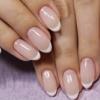
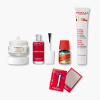
How to Stop Biting Your Nails: A Four-Week Plan
Mavala UK's nail expert Lynn Mason has guided countless biters, adults and children alike, through exactly this process, and her advice always starts the same way: this is a habit, not a failing. With a simple four-week plan, a little Swiss know-how and some patience, most people see real nail growth within a month.

summary
How do you stop biting your nails?
The most reliable way to stop biting your nails is to break the unconscious loop with a bitter-tasting deterrent polish, keep your nails short and neatly filed so there is nothing to catch on, and give your hands something else to do when the urge arrives. Mavala Stop does the first part for you: one coat of the clear, bitter formula and every absent-minded nibble becomes a gentle reminder rather than a setback.
Why do we bite our nails in the first place?
Nail biting, onychophagia, to give it its proper name, is remarkably common: published estimates vary widely by group, but studies of young adults have put it at around 20 to 30 percent, and it is described by DermNet as a common stress-related or nervous habit in children and adults. It usually starts in childhood and tends to flare when we are concentrating, bored or under pressure: exam season and busy work periods are classic triggers. Most of the time, biters are not even aware they are doing it, which is exactly why willpower alone so rarely works.
It is worth being kind to yourself here. Biting is a soothing habit the brain has learned, not a character flaw, and it can be unlearned in the same way: by interrupting the automatic moment and replacing it with something better. The damage it does, sore cuticles, redness, the risk of infection and nails that never get the chance to grow, is all reversible.
Lynn's note: "The first thing I tell anyone who bites is to stop apologising for it. Nearly a third of us have done it. The trick is not to try harder: it is to make the habit impossible to do without noticing, and that is precisely what a bitter deterrent is for."
The four-week plan: how it works
The plan below is built around Mavala Stop, the Swiss-made deterrent that has been helping nail biters for decades. It is a clear, dermatologically tested polish with an intensely bitter (but harmless) taste: invisible on the nail, wearable alone or over your favourite colour, and suitable for both adults and children. Check the pack guidance for use on little ones.
The structure matters as much as the product. Each week has one focus: interrupt the habit, tidy the nails, reward the progress, then protect the new growth. Four weeks is roughly the time it takes for visible free edge to appear on a bitten nail: enough to see, and feel, the difference.
Week 1: Apply Mavala Stop and learn your triggers
Start simply. Apply one coat of Mavala Stop to clean, dry nails every day this week. The bitter taste does the interrupting for you: each time your hand drifts to your mouth, you get an immediate, harmless prompt to stop, no willpower required.
While Stop handles the reflex, your job is to notice the pattern. Each time you catch yourself, jot down what you were doing: scrolling, emails, television, traffic. By the end of the week you will know your two or three trigger moments, and you can plan a replacement for each: a stress ball at your desk, hand cream by the sofa, anything that keeps fingers busy.
One clever trick from the Mavala method: if you find going all-in too abrupt, leave one nail, say, the little finger, untreated as your designated "spare", and protect the other nine. As the nine grow and the one stays bitten, the contrast becomes its own motivation to give it up too.
Week 2: Keep nails short, tidy and impossible to nibble
A ragged edge is an open invitation to bite, so this week is about removing temptation. File your nails short and smooth with a fine emery board: short nails simply give teeth nothing to catch on. File in one direction rather than sawing, and tidy any rough corners as soon as you notice them.
Cuticles need the same attention, because many biters nibble the skin as much as the nail. Massage a nourishing cuticle oil into the nail contour every day to soften dryness and keep the skin supple: well-conditioned cuticles are far less tempting to pick at. The British Association of Dermatologists advises against biting your nails or pushing back the cuticles, and keeping the hands dry, to protect the skin around the nail. From this week you can ease Mavala Stop back to every second day; the habit loop is weakening, but it is too soon to remove the safety net.
Week 3: Your first proper manicure, the reward
By now there should be a sliver of free edge appearing, and this is the week to celebrate it. Give yourself (or book) a proper manicure: shape the nails, care for the cuticles, then finish with a base coat, a colour you love and a glossy top coat. If polish is not your thing, a clear shine finish works just as well.
This step is not vanity, it is strategy. Nails you have invested in are nails you protect, and a freshly painted set makes the unconscious nibble far less likely. Many reformed biters say the first manicure was the turning point: the moment their hands became something to be proud of rather than hide.
Keep up the daily cuticle oil, and continue Mavala Stop every second day underneath or over your polish: it dries clear and will not alter the colour.
Week 4: Maintain the habit and strengthen new growth
The final week is about making the change permanent. Nails that have been bitten for years grow back soft at first, so they need reinforcement. Apply Scientifique K+, Mavala's nail hardener, along the free edge: it penetrates and fortifies the keratin, helping fragile new growth come through firm enough to resist breaks (and absent-minded teeth).
Keep the weekly manicure ritual going, keep the cuticle oil daily, and keep a bottle of Mavala Stop in the drawer for high-stress weeks. Slips happen, and they are not failure: one bitten nail after a difficult day does not undo a month of progress. Reapply, restart, carry on.
Lynn's note: "The four-week mark is where people relax, and that is exactly when I tell them to strengthen. A course of Scientifique K+ on that new free edge makes all the difference between nails that last and nails that snap and tempt you straight back into the habit."
How do I stop biting my nails?
Combine three things: a bitter-tasting deterrent polish such as Mavala Stop to interrupt the unconscious habit, short and neatly filed nails so there is nothing to catch on, and a replacement activity for your trigger moments. Most people see meaningful regrowth within four weeks of starting a structured plan.
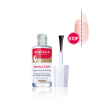
Does nail biting polish work?
Yes, deterrent polishes work because most biting is unconscious. The intensely bitter taste interrupts the habit at the exact moment it happens, which willpower alone cannot do. They work best as part of a routine: consistent reapplication, short tidy nails and daily cuticle care give the deterrent a habit-free foundation to protect.
How long does it take to stop biting your nails?
Allow around four weeks to break the habit and see visible new growth, which is roughly how long a bitten nail takes to show a healthy free edge. The habit loop itself usually weakens within the first one to two weeks of using a deterrent. Badly bitten nails may take a few months to fully recover their length and strength: keep going.
Is Mavala Stop safe for children?
Mavala Stop is dermatologically tested and designed for both adults and children: it has been a long-standing recommendation for young nail biters and thumb suckers. The formula is clear and harmless, with only the bitter taste doing the work. As with any product used on little ones, check the pack guidance before use and apply it for them.
Why do I bite my nails?
Nail biting (onychophagia) is usually a self-soothing habit triggered by concentration, boredom or stress, and it typically starts in childhood. Up to 30% of people bite their nails at some point, so it is extremely common and nothing to be ashamed of. Because it is mostly unconscious, the most effective fix is interrupting the moment itself with a bitter deterrent rather than relying on willpower.
About Lynn Mason, Mavala UK Nail Expert
Lynn Mason is Mavala UK's resident nail expert. She has worked with the Mavala brand for over a decade, training nail technicians and beauty editors across the UK and writing Mavala's how-to guides.
Lynn's view: "Bitten nails are the transformation I love most, because the before and after is so dramatic. Four weeks of Stop, short tidy nails and a bit of cuticle oil, and people who have hidden their hands for twenty years suddenly cannot stop looking at them. Be patient with yourself: the habit took years to form, and a month to undo is a very good trade."
Reviewed by Lynn Mason, Mavala UK Nail Expert. Updated 29 June 2026.
Students: 20% off Mavala
Studying in the UK? Students get 20% off Mavala with a university email address ending .ac.uk. Sign up for your student code. It takes a minute, and the code is valid for a year.
More from the Mavala Edit
- The Student Bathroom Shelf: Six Things Worth the Space, including Crayon Lumière for eyes
- How to Apply Eyeliner: A Step-by-Step Guide
- How to Strengthen Weak Nails: A Nail Expert's Guide, the next step once your nails are growing back