Looking After Yourself During Cancer Treatment: Skin, Nails, Hands, Feet, Brows and Lashes
Cancer treatment changes more than you expect: skin goes dry and sensitive, nails ridge and split, hands and feet can get sore, brows and lashes may thin or go. None of it is your fault and most of it is temporary. This is a plain, practical guide to caring for yourself through it, built on what Macmillan Cancer Support, Breast Cancer Now, Cancer Research UK and the NHS advise, with an honest note on where our own products fit and where they do not.

summary
In brief
Wash with lukewarm water and a mild, unperfumed, soap-free cleanser, pat dry, and moisturise every day with an unperfumed cream. Use sunscreen of at least SPF 30 with a 4 or 5 star UVA rating whenever you are out, and SPF 50 on any area that has had radiotherapy, for at least a year afterwards. Wear gloves for chores, keep hands and feet cool and comfortable, and keep nails short with an emery board. If brows or lashes thin, a thin pencil and a soft eyeliner do a lot; ask your team before false lashes and skip curlers and microblading. Keep make-up scrupulously clean. Tell your doctor or nurse about any skin or nail change, and ring the hospital straight away for a spreading rash, blistering or peeling skin, or a high temperature.
Skin: cleanse gently, moisturise daily
Chemotherapy, targeted and immunotherapies, hormonal therapies and steroids can all cause rashes, dry skin or spots that look like acne, in Macmillan's words. Breast Cancer Now puts it simply: chemotherapy drugs can make your skin dry or more sensitive, and can cause rashes.
The care advice is consistent across the charities. Macmillan says to wash with lukewarm water using mild, unperfumed, soap-free cleansers, because soap will make your skin drier; to avoid cleansers, toners or face washes with perfume or parfum in the ingredients, which means the product contains alcohol; and not to use products containing sodium lauryl sulphate (SLS), especially if you have eczema. Cancer Research UK says to moisturise daily with an unperfumed moisturising cream to help prevent your skin from getting dry or itchy, and to cleanse and tone before you moisturise, choosing gentle products or those made for sensitive skin.
Radiotherapy skin is a separate case and the rules are stricter and site-specific. Cancer Research UK and the NHS say to wash the area gently with your usual soap and water, pat rather than rub, and use your usual moisturiser unless it irritates; Cancer Research UK adds not to use perfume on the area. Anything else you want to put on treated skin, including make-up and deodorant, check with your radiotherapy team first. Macmillan's guide to skin and nail changes is the one to keep open.
Sun protection, and why the number changes
Some chemotherapy drugs make you more sensitive to the sun, and Macmillan says your skin may burn more easily during treatment and for several months after. For everyday treatment-related sensitivity, Macmillan and Cancer Research UK both give the same floor: a sunscreen of at least SPF 30 with a 4 or 5 star UVA rating, used generously, reapplied regularly and combined with shade and clothing. Macmillan's fuller recommendation is SPF 50, including a lip balm with a sun protection factor of at least 50, and SPF 30 or more on your scalp if you have lost hair.
For skin that has had radiotherapy the figure moves up, not because the charities disagree but because the context is different: Cancer Research UK, Breast Cancer Now and the NHS all say SPF 50 or above on the treated area, kept up for at least a year after treatment ends, and to avoid exposing the treatment area to the sun during radiotherapy.
Hands and feet, including sore palms and soles
Certain drugs may make the palms of your hands or the soles of your feet red and sore; Macmillan calls this palmar-plantar syndrome and Breast Cancer Now and Cancer Research UK call it hand-foot syndrome. Cancer Research UK says most symptoms clear up once you have finished treatment, and to tell your doctor or specialist nurse about any changes to the skin on your hands and feet. To help relieve symptoms, its advice is to take medicines prescribed by your doctor, keep your skin well moisturised with creams from your doctor or nurse, keep your hands and feet cool, avoid very hot water, and avoid tight fitting gloves or socks.
For everyday protection, Macmillan says to wear protective gloves for household tasks and gardening to protect your nails and skin from detergents, chemicals and injury; to keep hands and nails clean without using very hot water; and to wear comfortable shoes and cotton socks, avoiding anything tight-fitting or that rubs against your toes. Breast Cancer Now adds the simplest line of all: use hand cream to help moisturise your hands, feet and nails.
For hands and feet, these are the products we recommend. For hands, Mava-Plus Cream, a fragrance free cream for very dry and damaged hands, with a botanical complex that forms a protective film, plus shea butter and bisabolol to soothe tight skin, morning and night. For feet, Conditioning Moisturizer for Feet every morning if your feet are simply dry, or Hydro-Repairing Foot Care at night with cotton socks over the top if they are very dry or your heels have cracked. We also suggest having a pedicure done by a professional, particularly if you get hard, thickened skin. Check anything new with your care team first, and stop if it is not well tolerated.
Nails
Nails can grow more slowly, ridge, split or lift during treatment, and the risk of infection is higher. The short version: keep them short with an emery board rather than scissors, filing in one direction; massage cuticles with a cream or oil and never cut them; wear gloves for chores; avoid acetone remover; ask your team before false nails, gels or acrylics; and tell your nurse about any change. We have written a full guide, Looking After Your Nails During Cancer Treatment, including where the charities differ on wearing polish.
We go further than that and recommend a complete Swiss manicure, a base coat, two thin coats of an opaque polish and a top coat, done the day before treatment and kept up throughout. The nails article has the full protocol and says which base coat suits which kind of nail.
Hair, brows and lashes
Chemotherapy drugs that cause hair loss can cause other hair to fall out too, including eyelashes and eyebrows, as Cancer Research UK explains. Macmillan says brows and lashes usually grow back. Breast Cancer Now gives the timings: eyelashes can be quite patchy when they start to grow back, usually returning in about six months after treatment finishes and taking up to a year to grow back fully; eyebrows usually start to grow back after treatment finishes but may grow back thinner or patchier.
In the meantime, Macmillan's advice on brows is practical: use a thin eyebrow pencil, ideally a micro-brow pencil that can create small strokes that look like hairs, and draw from the centre of the brow line outward using light, feathery strokes. For lashes, use a soft eyeliner and smudger to define your eyes and create the illusion of eyelashes; Breast Cancer Now suggests the same, drawing along the top of the eyelid. If you lose your lashes your eyes may get sore easily, and Breast Cancer Now says to ask your treatment team for eye drops if they become irritated.
Three cautions, all from the charities. False eyelashes: check with your specialist nurse or healthcare team first, because some glues can irritate sensitive skin and some people are allergic to the adhesive. Eyelash curlers: do not use them, they can damage fragile eyelashes. Microblading or brow tattooing: Macmillan says this should not be done during treatment, and Look Good Feel Better UK says the same, so always speak to your cancer doctor first.
For hair itself, wash it as you normally would; washing will not make hair loss worse or faster, says Macmillan. Use a mild, unperfumed shampoo, pat rather than rub, and use a soft brush or wide-tooth comb. If your scalp is dry, flaky or itchy, a gentle fragrance-free moisturiser is fine, and put SPF 30 or more on your scalp when you go out.
We name two products here, and both come with their own limits. For lashes, Mavala Double-Lash, applied every night to clean lashes once they start growing back, for at least two months; loss caused by treatment cannot be avoided, so this is about the regrowth afterwards. For brows, Double-Brow, morning and night for at least two months. Both are without prostaglandins and both have been clinically tested, Double-Lash under ophthalmological control and Double-Brow under dermatological and ophthalmological control. Neither replaces anything your team has told you, so ask them first and stop if either is not well tolerated.
Make-up: keep it clean
Make-up is allowed and can help you feel like yourself; the charities' concern is infection, so the rules are about hygiene. From Macmillan: wash your hands before applying creams or make-up; do not share make-up brushes, sponges or any other applicators; clean brushes and sponges at least once a week or use disposable ones; check expiry dates and look for the period-after-opening symbol on cream products; put lids back on; if you use mascara, avoid pumping the wand into the tube; and take eye make-up off using a new cotton pad for each eye to avoid spreading any possible infection. If you wear foundation you may need to change shade during treatment; choose a base that is not visible at your jawline. Cancer Research UK adds that face masks go onto clean skin with clean hands, and to check with your team before using them if you are having treatment or have a skin reaction.
If you would like hands-on help, Macmillan and Boots run free sessions with No7 Boots Macmillan Beauty Advisors, and Look Good Feel Better runs free skincare and make-up workshops for people going through treatment, including sessions on brows and lashes.
When to call your team
Tell your doctor or nurse about any changes to your skin or nails during treatment, and if you develop a rash, get it checked by your cancer doctor or specialist nurse straight away. Macmillan says to contact the hospital straight away on your 24-hour number if you have a skin rash that is spreading, blistering or peeling skin, flu-like symptoms such as a high temperature and joint pain, or sores on your lips or in your mouth. Cancer Research UK adds: contact your team if you are struggling with itching, and do not delay seeing your doctor if you have any nail infection.
Where our products fit, and where they do not
Mavala makes nail care and skincare. Our products care for skin, nails, hands, feet, lashes and brows; they do not treat, prevent or cure anything, and nothing here replaces the advice of your care team. With that said plainly, these are the ones we recommend, and the ones whose descriptions line up with what the charities ask you to do.
Prebiotic Hand Cream. Dermatologically tested and suitable for sensitive skin. Use it as the daily hand, foot and nail moisturiser the charities recommend.
Mava-Plus Hand Cream. Fragrance free, for very dry and damaged hands, morning and night. This is the one we pick for hands during treatment.
Conditioning Moisturizer for Feet and Hydro-Repairing Foot Care. The first for dry feet every morning, the second at night for very dry feet and cracked heels, with cotton socks over the top.
Cuticle Oil, Emery Boards and the acetone free removers, the Extra-Mild Pink, the Crystal and the Pads. The ones that match the nail advice: massage cuticles rather than cutting them, file with an emery board rather than clippers, and never use acetone. More in the nails article.
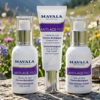
Caress Cleansing Milk and Caress Toning Lotion. We pick these two for cleansing during treatment: a physiological pH, aloe vera and soothing mallow flower extract, so they take make-up off and clean the skin without stripping it. Clean & Comfort Alpine Softness Micellar Water is the other gentle option, ophthalmologically and dermatologically tested and made for sensitive skin. Check any ingredient list against your own team's advice on fragrance.
Aqua Plus, or Nutri-Elixir if your skin is very dry. Our routine: Aqua Plus Intensive Serum for face and eyes in the morning, then Aqua Plus Featherlight Cream for continuous hydration, then the Aqua Plus Sleeping Mask in a thin layer in the evening. If your skin is uncomfortable and the barrier feels stripped, we point you to the richer Nutri-Elixir range instead, Essential Serum morning and night, Ultimate Cream in the morning and Absolute Night Balm at night.
Eye Contour Double Cream. Shea butter, aloe vera and hyaluronic acid, applied in the evening to the eye contour, and in the morning as well if the skin there is particularly dry. Ophthalmologically tested and suitable for sensitive eyes.
Eye Makeup Remover Lotion. Ophthalmologically tested, for taking off non-waterproof eye make-up gently, one fresh cotton pad per eye.
Eyebrow Pencil. An ultra-soft pencil with a built-in spiral brush for blending. It is a drawing tool for the light, feathery strokes Macmillan describes, nothing more.
Mavala Double-Lash and Double-Brow. The two we recommend for lashes and brows during and after treatment, on the terms set out above: nightly on clean lashes from regrowth, morning and night for brows, at least two months for either. The UK charities do not recommend any growth product for treatment related lash or brow loss, so treat these as our own advice rather than clinical advice, and ask your care team before you start.
And where they do not fit. Our lip balms are SPF 15, which is below the SPF 50 Macmillan asks for on lips during treatment, so use a dedicated SPF 50 lip product and treat ours as everyday comfort only. We do not make an SPF 50 face product, so pair any of our creams with a proper sunscreen. Hydro-Repairing Foot Care is a 25 per cent urea cream built to work on hard, cracked skin, and we recommend it for very dry feet and cracked heels during treatment, but if your feet are sore, red or reacting the charities say to keep the skin cool and use the creams your doctor or nurse gives you, so check with them before you put it on.
Shop Mavala
Everything named above, in one place.
Sources
Macmillan Cancer Support, Skin and nail changes from cancer treatment (next review April 2028); Macmillan, Changes to your eyebrows and eyelashes during treatment (next review April 2028); Macmillan, Sun safety and cancer treatment; Macmillan, Cancer hair care. Breast Cancer Now, Chemotherapy side effects (reviewed July 2025); Breast Cancer Now, Will I lose my eyelashes, eyebrows or body hair during chemotherapy?; Breast Cancer Now, Side effects of radiotherapy. Cancer Research UK, Your skin, nails and cancer drugs; Cancer Research UK, Hair loss, hair thinning and cancer drugs; Cancer Research UK, Caring for your facial skin; Cancer Research UK, Your skin (radiotherapy side effects). NHS, Side effects of radiotherapy. Look Good Feel Better UK, FAQs. Product descriptions quoted from mavala.co.uk on 5 September 2026.
Our own Mavala guidance (Mavala SA, Geneva) for all Mavala method and product advice in this article.