Flaking Nails After Summer: Is the Washing Up to Blame?
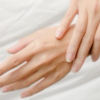
Every autumn the same thing happens. Nails that looked fine all summer start to flake, peel at the tips and catch on everything. The summer itself is part of the story, and so is something much more ordinary: the washing up. Here is why it happens, and what actually helps.

Summary
Why are my nails flaking after summer?
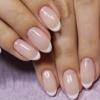
Sun and water are two of the things that dry nails out, and summer brings plenty of both: long days outdoors, the sea, the pool. Dry nails become hard and brittle. Mavala's own care range names the culprits plainly: sun damage, water exposure and chemicals from outside, age and heredity from inside. As the nail grows, the tip, the oldest and most exposed part, is the first to separate into layers. That is the flaking you can see and feel.
There is a timing twist too. Fingernails grow at roughly three to three and a half millimetres a month, so the nail at your fingertips today was formed months ago. The dryness summer caused may only be reaching your nail tips now.
Why does washing up make it worse?
A nail is made of thin layers held together by natural oils. Water makes it swell and then shrink again as it dries, and detergent strips those oils away. Knocks against the sink do the rest. We explain the wet-dry cycle in more detail in Splitting & Peeling Nails: Causes & How to Fix Them.
Autumn adds one more thing: drier indoor air once the heating goes on. Nails are measurably more brittle in dry air.
Three small habits make a real difference:
- Wear washing-up gloves. It is the single easiest change.
- Dry your hands properly afterwards, nails included.
- Keep a hand cream by the sink and use it every time. Mava-Plus is made for very dry, damaged hands.
What is Mavala Nail Shield and what does it do?
Nail Shield is a two-phase treatment that works like armour for the nail. Phase 1 lays down a mesh of fine nylon fibres on the nail. Phase 2 seals and smooths the surface over it. Together they form a mechanical barrier that protects fragile nails against shocks, splits and chips.
One thing to be clear about: Nail Shield does not harden the nail. It protects it. For flaking nails, that protection is the point. It defends the damaged tips while a care treatment works underneath.
Not sure whether your nails need a base coat, a ridge filler or Nail Shield? We compare all three in Base Coat, Ridge Filler or Nail Shield: Which One Do Your Nails Need?.
When should you use Nail Shield?
Reach for it when:
- your nail tips are flaking, splitting or chipping
- the nail plate is thinned or damaged
- your nails feel sore after having gels or acrylics removed
Apply Phase 1 to clean, oil-free nails and let it dry. Then apply the Phase 2 sealer coat, with a second coat if the surface needs more smoothing. You can stop there for a natural look with a clear topcoat, or apply your usual colour in two thin coats, then a topcoat. Let each layer dry fully.
What else helps flaking nails?
Nail Shield protects. Recovery comes from pairing it with care, as Mavala recommends.
- Scientifique K+ fortifies the nail tip, the most delicate part and the first to split.
- Nailactan nourishes the nail at the root with amino acids, lipids and vitamins, for nails weakened by knocks, detergents, sun and frequent washing.
- Mava-Flex restores hydration and elasticity to dry, hard nails.
- Mava-Strong is the everyday base coat for weak nails, protecting against water and detergents under your polish.
- Cuticle Oil keeps the skin around the nail soft and helps prevent dryness and torn cuticles.
A simple autumn routine
Gloves for the washing up. Nail Shield while the damaged part grows out. A care treatment underneath doing the repair work: K+ for brittle, splitting tips or Nailactan for nails that feel starved. Hand cream by the sink so it actually gets used. Nothing complicated, just consistent.
Does Nail Shield harden nails?
No. It forms a protective barrier over the nail rather than hardening it. If your nails are brittle or splitting and you want a strengthening treatment, that is what Scientifique K+ is for.
Can I wear nail polish over Nail Shield?
Yes. Apply your polish in two thin coats over the Phase 2 sealer, then a topcoat. Or keep it bare with just a clear topcoat.
Is Nail Shield suitable after gel or acrylic removal?
Yes. Mavala recommends it for nails with a damaged or thinned nail plate, including nails that are painful to the touch after artificial nail removal.
How long do flaking nails take to recover?
The flaked part of a nail cannot repair itself. It has to grow out and be replaced by healthy nail. Protect the tips while that happens and feed the new growth at the root. Most people see a difference within two to three months of a consistent routine.
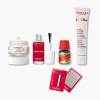
Shop Mavala
Everything in this article, in one place.
Sources
- Mavala UK, Nail Shield product page (description and How to Use)
- Mavala UK product pages: Mava-Strong Base, Nailactan, Mava-Flex Serum, Mavala Scientifique K+, Cuticle Oil, Mava-Plus Hand Cream
- Mavala UK, The Mavala Edit: Splitting & Peeling Nails: Causes & How to Fix Them
- Yaemsiri S et al., Growth rate of human fingernails and toenails in healthy American young adults, Journal of the European Academy of Dermatology and Venereology, 2010
- Laboratory research on nail flexibility at low humidity, University of Manchester, 2009, and the Journal of Experimental Biology, 2008